

April 14, 2026 – The term “revisionist power” describes states dissatisfied with the existing world order and seeking to reshape the norms and institutions that govern it. These powers stand in contrast to the “status quo” powers — those seeking to maintain the existing world order. Since the end of the Cold War, the lines have been fairly clear: the U.S.-led liberal order, with institutions including NATO and the U.N., represented the status quo. Countries like China, Russia, Iran, and North Korea sought to challenge it.
The Iran War, which, as of this writing, has entered a fragile ceasefire, shows just how tenuous this framework has become in recent years. This change comes less from the Iranian state, which continued to assert its role as a major regional power, mostly through attacks on neighboring countries and by seizing control over the Strait of Hormuz. Nor were the reactions of its loosely defined allies, Russia and China, much of a surprise — their bond is not based on ideology or a shared vision of an alternative world order, but on convenience in opposition to the status quo. Predictably, they offered lip-service protestations, blocked a U.N. resolution brought forward by Qatar to open the Strait of Hormuz, and, in the case of China, continued to purchase Iranian oil. The change, rather, is in the U.S. and its allies.
Contrary to previous wars in the Middle East, the U.S. did not seek to build an international coalition before the war, nor did it seek the backing of the U.N. or even NATO, at least at the early stages of the offensive. The U.S.’s traditional allies, namely Europe and Japan, refused for the most part to take part in the campaign — and it is far from clear they could have contributed meaningfully even if they had wanted to. Instead, the U.S. fought alongside Israel in the most explicit manner ever, supported, according to news reports, by multiple Gulf states, including Saudi Arabia and the United Arab Emirates.
That Europe chose not to support the U.S. says much about the demise of the close ties between the two that defined much of the post-WWII era. That Europe may not have been able to offer much support even if it had wanted to — this despite the outsized economic toll it faces as a result of the closing of the Strait of Hormuz — points to the European Union’s continued struggle to find its footing in the face of internal fractures, complex bureaucracy, and diminished economic standing.
In all, the Iran War is a continuation of the shift in world order we have been living through for much of the past decade. This shift has accelerated markedly since the beginning of this administration. Alongside the geopolitical implications, the economic impact is significant and still playing out. The vulnerability of the Strait of Hormuz is another blow to globalized trade, alongside tariffs and other protectionist policies, and a further reminder of the risks facing those who rely on trade partners for essential goods, especially oil and gas.
The Economy and Markets
The U.S. economy entered 2026 with both tailwinds and headwinds. The tailwinds include fiscal stimulus from tax refunds, reduced tariffs following the Supreme Court ruling in February, and productivity growth from AI. The Iran War has had little effect on these, and there are reasons to believe the U.S. economy could continue to grow.
The headwinds, however, are another story, and much depends on how long the ceasefire holds. Chief among these is sticky inflation, now made worse by the recent surge in oil prices. Beyond the pain at the pump, fuel prices trickle through to almost all aspects of the economy and can have an outsized inflationary effect. March’s inflation reading came in at 3.3%, following February’s 2.4%. This, in turn, complicates the Fed’s path to lowering interest rates and reduces its ability to react to further weakness in the labor market. Fortunately, March’s jobs report showed a gain of 178,000 jobs, defying expectations. Taken together with February’s loss of 133,000 jobs, the picture is one of an economy still growing, albeit at significantly lower rates than in the last few years.
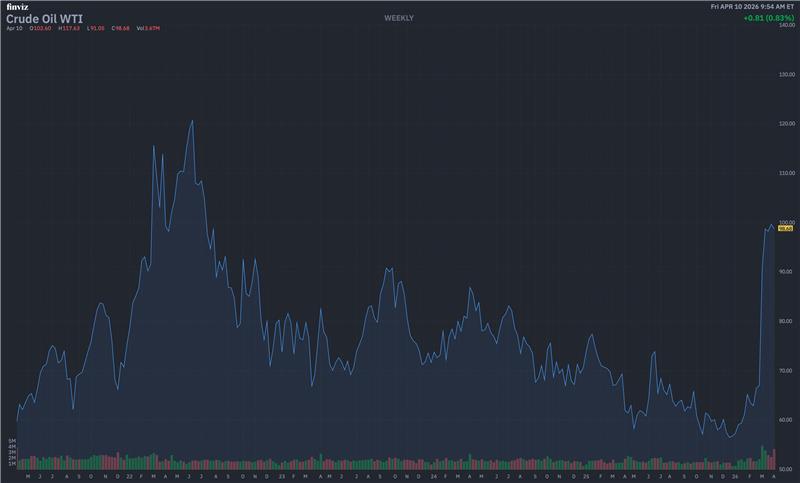
For the global economy, the news may be even harsher. Many countries suffered severe energy shortages due to the Iran War, highlighting that even in a globalized commodity market, local access matters. Natural gas is a case in point: the U.S. cannot export significantly larger quantities even if it wanted to, due to infrastructure limitations. The U.S., as a net energy exporter, is relatively insulated; Europe and much of Asia are not. Markets responded to the conflict with expected jitteriness. Oil soared to its highest level since 2022 and remains elevated even after the ceasefire came into effect, as questions about passage through the Strait of Hormuz lingered. U.S. large-cap stocks declined 4.3% over the first quarter, while the tech-heavy NASDAQ lost 7%. International stocks fared better, with developed markets declining 1.2% and emerging markets down only 0.2%. This continued trend of non-U.S. outperformance may signal a broader return to fundamentals-driven investing. Non-U.S. multiples remain attractive relative to their U.S. counterparts.
The bond market also showed weakness in the first quarter, with investors demanding higher yields as fears of persistent inflation were amplified by the war. Yields rose across all maturities, but more meaningfully at the shorter end of the curve as hopes for quick rate cuts by the Fed diminished. This quarter marks a rare occurrence in which stocks and bonds both declined together.
The Outlook
The direction of the U.S. economy in the coming months is likely to be heavily influenced by the price of oil. Higher prices for longer will further hurt consumers, many of whom are already feeling stretched. Growing income inequality means that lower-income consumers can scarcely afford another inflation spike — a dynamic the administration cannot afford to ignore ahead of a midterm election where the cost of living is likely to be the defining issue.
While some degree of economic slowdown as a result of higher prices is likely inevitable, this may not be enough to tip the U.S. into a recession. Tax refunds arriving this quarter could shore up the economy, as could tariff relief, though this may be offset by lingering uncertainty around tariff policy. It also remains to be seen what other fiscal stimulus the administration may reach for as the election nears, perhaps in the form of a tariff dividend.
In the broader perspective, the U.S. economy was already slowing before the Iran War, and the conflict only adds to this existing dynamic. But not every slowdown leads to a recession, and the line between the two can be a fine one. The fundamentals remain solid, even if the momentum has clearly slowed. Even the recent turbulence in the private credit markets appears to reflect more of a mismatch between retail investor expectations and the liquidity available in private markets. While some loans — especially to software companies — may sour, a wholesale repricing of private debt is not yet in the offing.
In all, the U.S. economy, like our society and the geopolitical world, remains in transition. Cultural, economic, and technological forces are reshaping our world, and in that change lies both peril and opportunity. In these times, as ever, investors should rely on process and discipline — matching their asset allocation to their time horizon, diversifying intentionally, and remaining aware of their own behavioral biases. The team and I stand ready to assist; please do not hesitate to reach out with any questions or concerns.
May the coming spring bring warmth and peace to us all.
— AMD