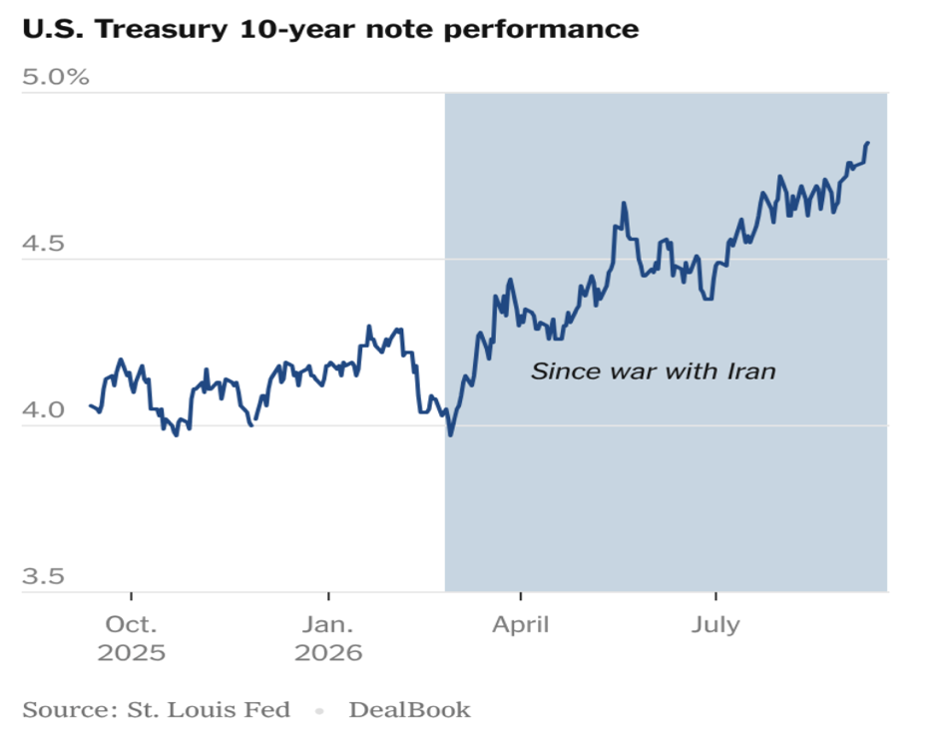
Yields on US 10-Year Treasuries – “the world’s most important asset,” according to Fed Chairman Kevin Warsh—continue to rise. Multiple factors are in play. Expectations for higher inflation and further interest rate increases by the Federal Reserve are undoubtedly an influence. However, demand for US Treasuries has fallen in Japan, France, and the UK as these countries tend to face various domestic issues. And geopolitical shocks have pushed up defense spending and national debt around the world, raising the supply of bonds (remember: demand down, supply up means prices fall and yields rise). Whatever the cause, a 10-Year Treasury yield above 5% demands a certain amount of notice.
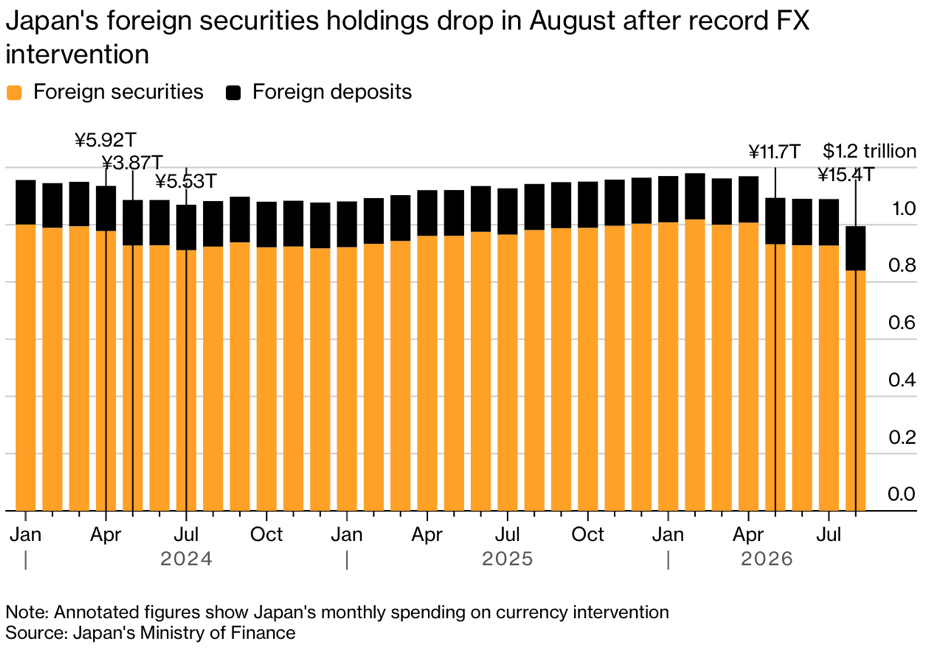
Japan has been selling US Treasuries to fund an intervention in currency markets and buying yen to prop up its value. A weak yen can lead to rising inflation, although the 2.3% inflation rate in Japan is only a small cause for concern. More significantly, the United States would like to see a stronger yen, thereby improving business prospects for US exporters.
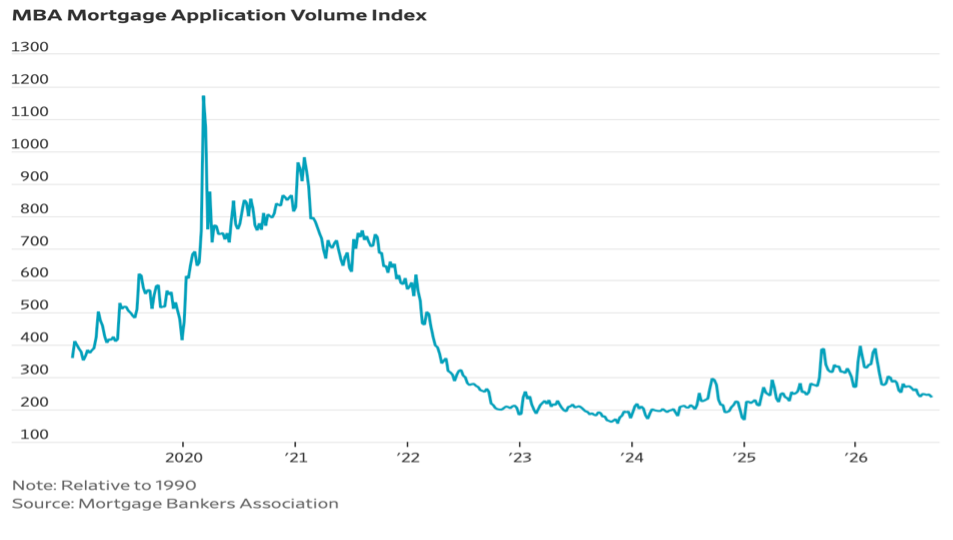
Rising bond yields have been wreaking havoc with US mortgage rates. The current Freddie Mac weekly average for a 30-year fixed mortgage is 6.97%, and Bankrate reports a bank lender average rate of 7.22%-7.375%. Not surprisingly, mortgage applications are down, and houses are sitting on offer for longer periods of time. US home builder confidence dropped to its lowest level in a year in September, according to the National Association of Home Builders.
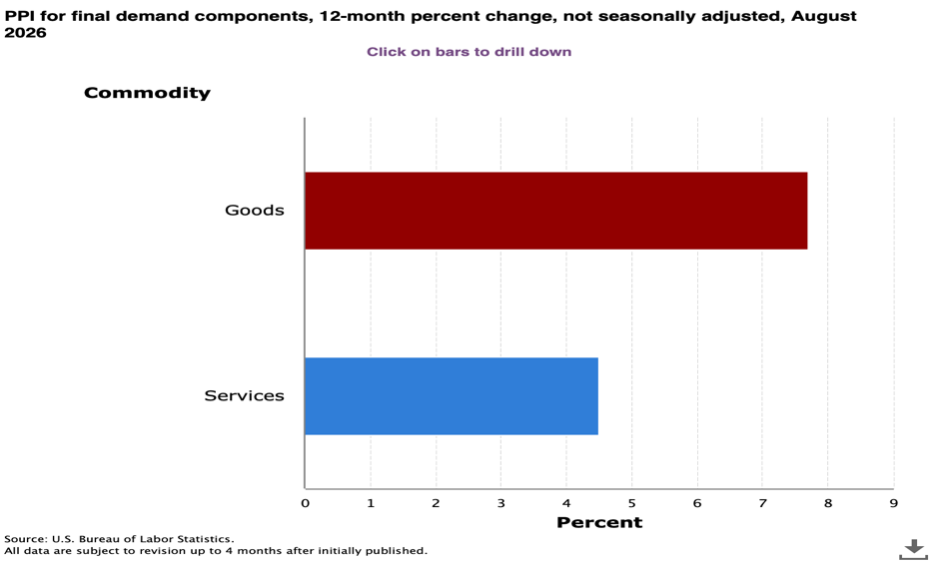
Producer Prices increased 5.4% on a year-over-year basis in August. Higher input prices for goods were a major reason, though service inflation also contributed to the challenging business environment. Elevated prices for energy and refined products are working their way through the system and impacting activity and margins in many industries.
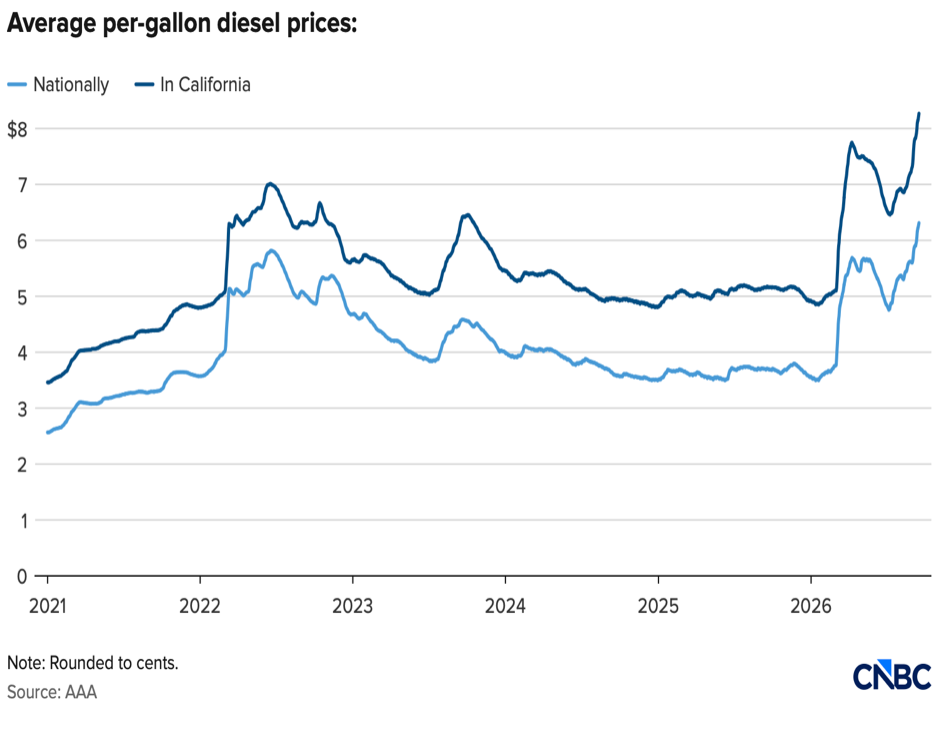
One trucking industry executive has described $8/barrel diesel as “something out of science fiction.” The importance of the fuel to the agricultural industry, both in farm work and in the transportation of farm products to market, is unquestioned: the 24.1% increase in diesel prices in August cannot easily be circumvented. Although residential package delivery is increasingly handled by electric delivery vehicles, diesel-dependent long-haul trucking is a key factor in US economic growth, and it has become painfully expensive.