
Treasury Yields Fall as Inflation and AI Debt Worries Rise

Last week, stocks prices were mixed, and bond prices were up (yields down). The MSCI EAFE (non-US developed) outperformed the S&P 500 and MSCI Emerging Markets indices. The best-performing sectors in the S&P 500 were consumer staples, energy, and health care. Across U.S. Russell style and market-cap indices, large-cap value performed best, and the high dividend factor led more broadly.
Q3 2026 Quarterly Letter: The Bond Market Has Spoken
October 20, 2026 – The third quarter was a difficult one for bond markets. The 10-year Treasury yield rose 82 basis points to 5.29%, its highest level since 2002, and the core U.S. bond index recorded its worst quarterly return since 2022. Stocks finished modestly higher, supported by strong corporate earnings. Our shorter-duration, higher-quality bond […]
For Better or for Worse: How Marriage Shapes Your Tax Bill

Whenever people talk about how the U.S. tax code treats married couples, the phrase “marriage penalty” is typically used. But calling it a flat penalty oversimplifies things. Depending on how your household earns, owns, and spends, saying “I do” can raise your annual tax bill, shrink it substantially, or do a bit of both. Today’s tax landscape tends to heavily penalize two high earners – especially if they happen to live in a high-tax state. On the flip side, U.S. tax law quietly favors single-earner households and families with significant estates.
Economic Commentary: Higher, Faster, Not Better
Inflation is a real problem. If you are a central banker, anywhere, the proper response to that statement is “of course.” Some economists, pre-disposed to equivocating, might answer “maybe”; Exhibit No. 1 is John Maynard Keynes who famously observed that a little inflation can be a good thing when trying to pull an economy out of the doldrums. (Exhibit No. 2 would be Japanese economists who watched the country struggle with deflation for many years.) The US inflation numbers released last week for consumer prices, producer prices and import prices put great emphasis on the reality, however: upward pressure on prices has now spread across the US economy, appears to be accelerating, is no longer attributable to “special statistical circumstances” such as the calculation of rent, and has caused real wages — wage growth in excess of inflation— to fall. Furthermore, as has become increasingly apparent, the cumulative effect of years of elevated inflation has raised price levels to a pain point for many households.
Robertson Stephens Crosses $10 Billion in Assets Under Management, Expands Institutional Consulting Business

New Milwaukee office and six-person team will serve foundations, nonprofits, faith-based organizations, corporations and endowments
Quarterly Market Environment
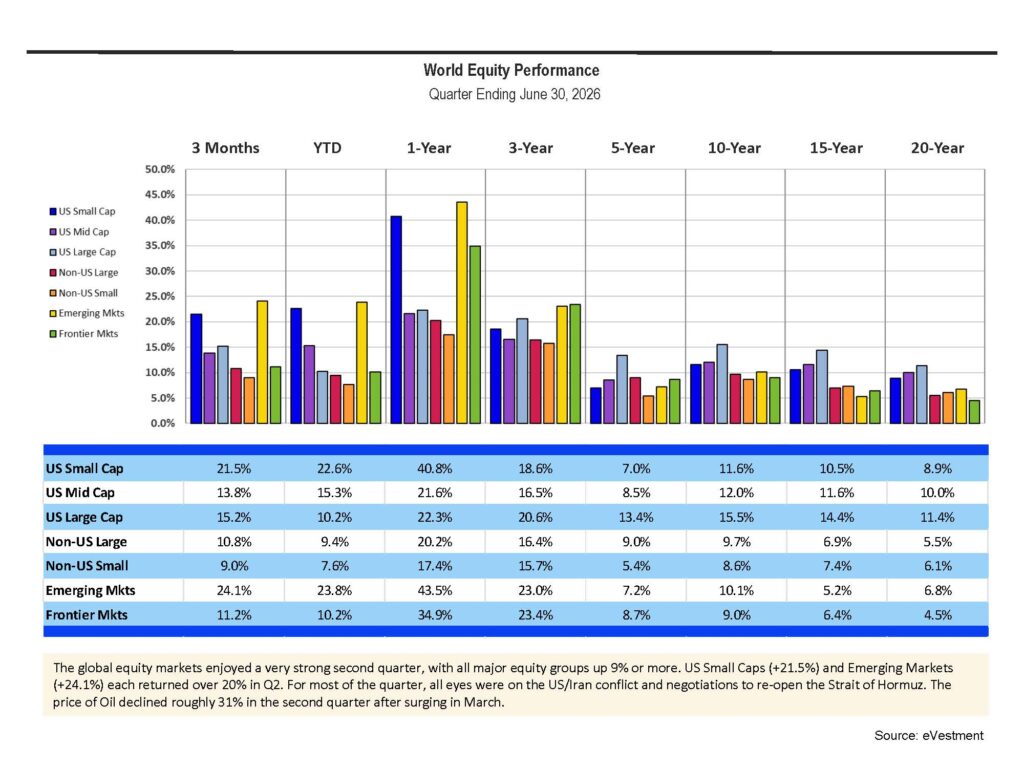
Q2 2026 Q1 2026
Facts and Figures
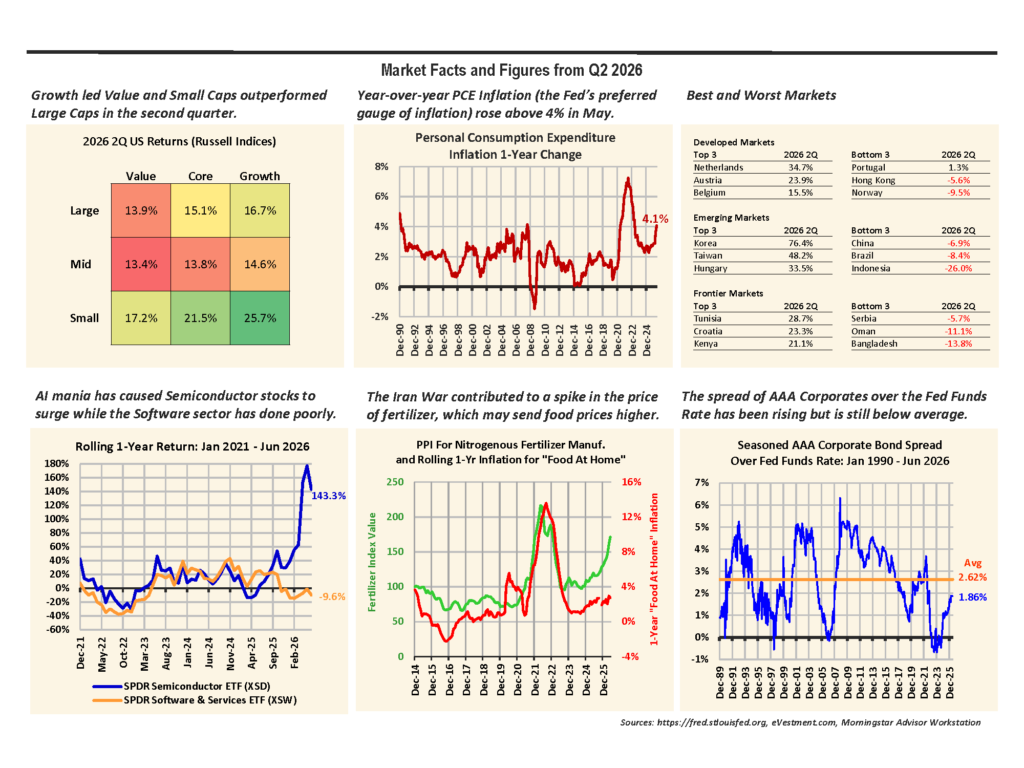
We believe that all investment decisions should be rooted in a thorough understanding of the capital markets. Robertson Stephens’ “Market Facts and Figures” highlights performance information and trends that developed during the quarter. Q2 2026
Market Microscopes
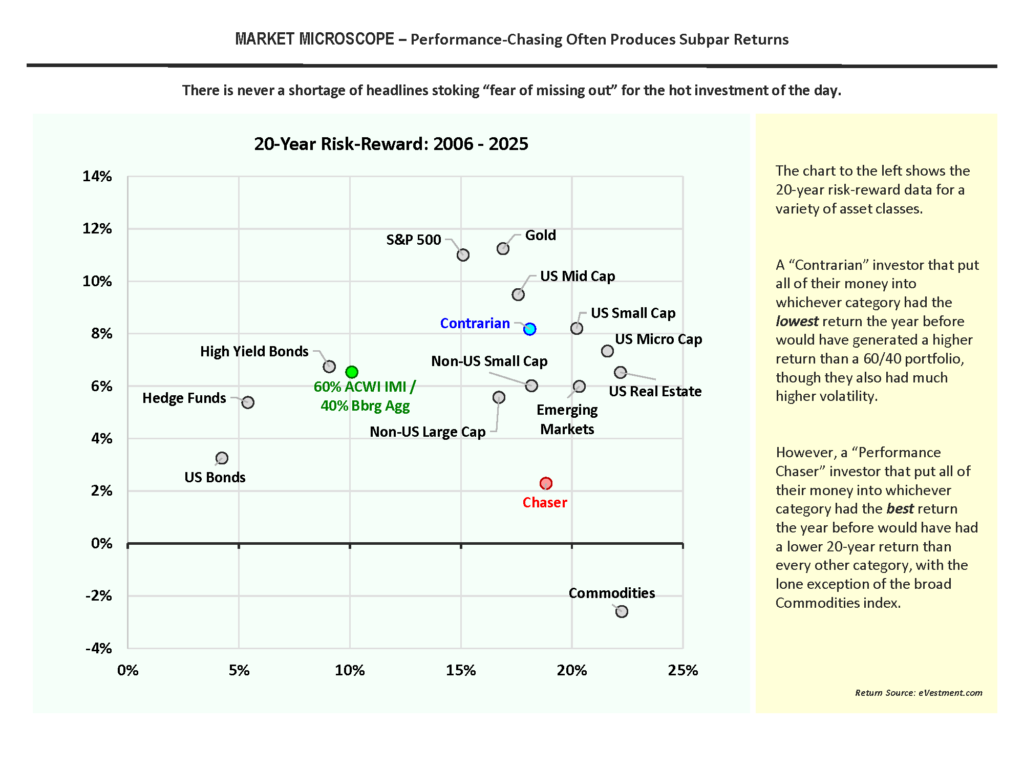
We believe that informed investment decisions benefit from a thoughtful understanding of the capital markets. The Robertson Stephens “Market Microscope” uses data, statistics, and other relevant information to provide context and perspective on a range of market topics—from foundational concepts, such as market indices, to more complex subjects, including investor behavior. Q2 2026