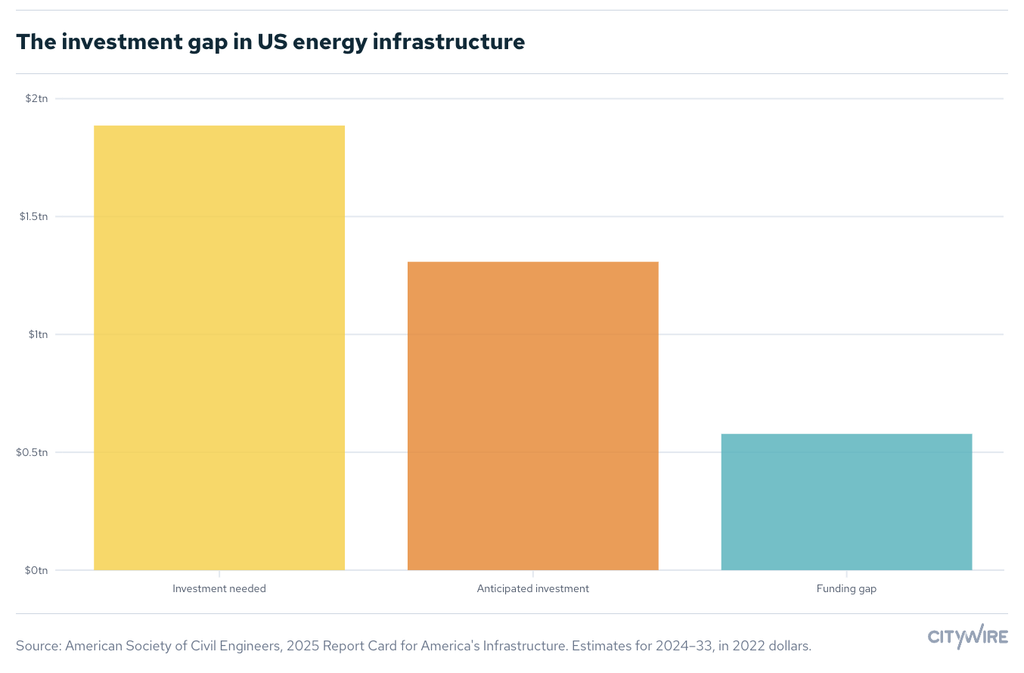
The scale of the US energy infrastructure challenge is becoming harder to ignore. The American Society of Civil Engineers estimates that $1.9tn of investment will be needed between 2024 and 2033, leaving a projected funding gap of $578bn.
Following a review of the society’s 2025 report card, Robertson Stephens began recommending in early 2026 that growth-oriented high-net-worth investors with at least a five-year investment horizon allocate part of their equity portfolios to the capital expenditure supercycle.
‘Even if the capex supercycle is elongated due to regulation, we believe there is a broad consensus recognition that massive power grid modernization is no longer a choice but a requirement to enable further economic growth,’ said CIO Stuart Katz.
“The exposure serves as a strong satellite holding to complement core US equity allocations”
-Stuart Katz, CIO, Robertson Stephens
The allocation spans raw materials producers, heavy equipment manufacturers, engineering and construction firms, and industrial transportation companies, with exposure to businesses such as Emerson Electric, Quanta Services and Union Pacific.
‘The exposure serves as a strong satellite holding to complement core US equity allocations,’ Katz said. ‘It helps investors who already have heavy exposure to mega-cap technology and semiconductors but want targeted exposure to the growing convergence between digital infrastructure and the physical economy.’





Robertson Stephens paid no fee to obtain recognition but has paid licensing fees to reference its appearances on the Newsweek, USA Today, and FA Magazine rankings lists. See Awards Disclosures