On Friday morning (August 7), the Bureau of Labor Statistics announced that net new job creation declined in July by 23,000 jobs. The Bureau also announced downward revisions to the job creation numbers in May and June. Yet, the unemployment rate fell to 4.1% due to a decline in the number of people actively looking for work, a trend that can only be explained by lower immigration and the retirements of Baby Boomers aging out. All of these numbers, unfortunately, are a bit suspect given what we know of the budget cuts to the BLS and its documented problems in getting accurate employment survey responses. Fewer jobs should mean less consumer spending and less economic growth, but in the second quarter economic data released earlier, consumer spending grew 3.2%, with a robust increase of 5.9% in spending on consumer goods.
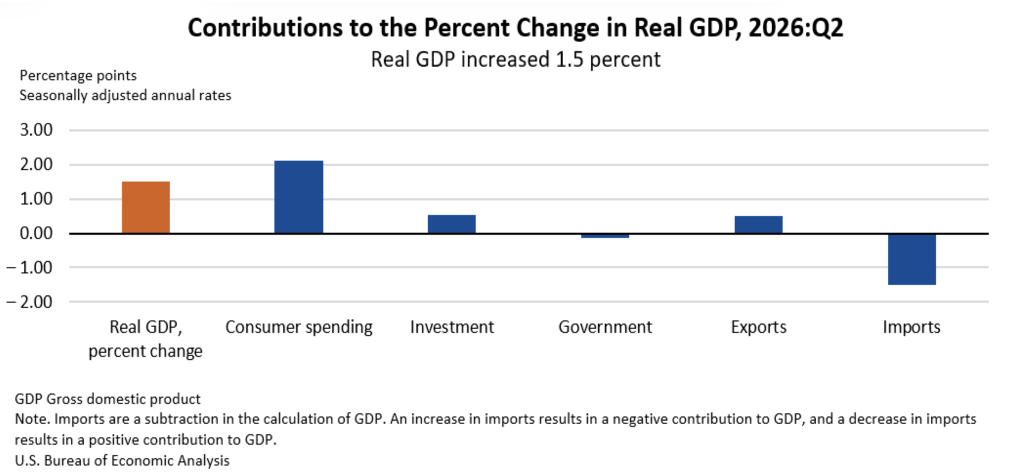
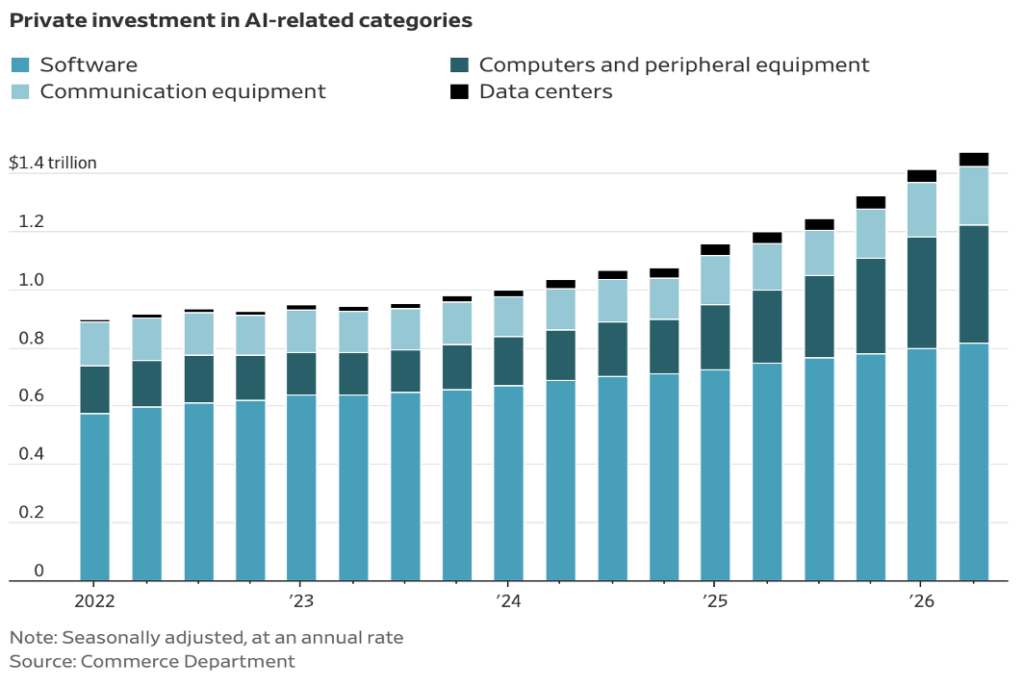
Business fixed investment—spending for structures, equipment, and software—also grew in the second quarter and provided substantial support for economic growth. The story that this investment is driven by the push to advance AI development is a well-known one, if not particularly well understood. Demand for workers in construction trades, business services (law, temporary employment, etc.), and other categories has risen due to the AI build-out, while job losses have been most notable in technology as tech companies strain to accommodate their exceptionally large investments in AI.
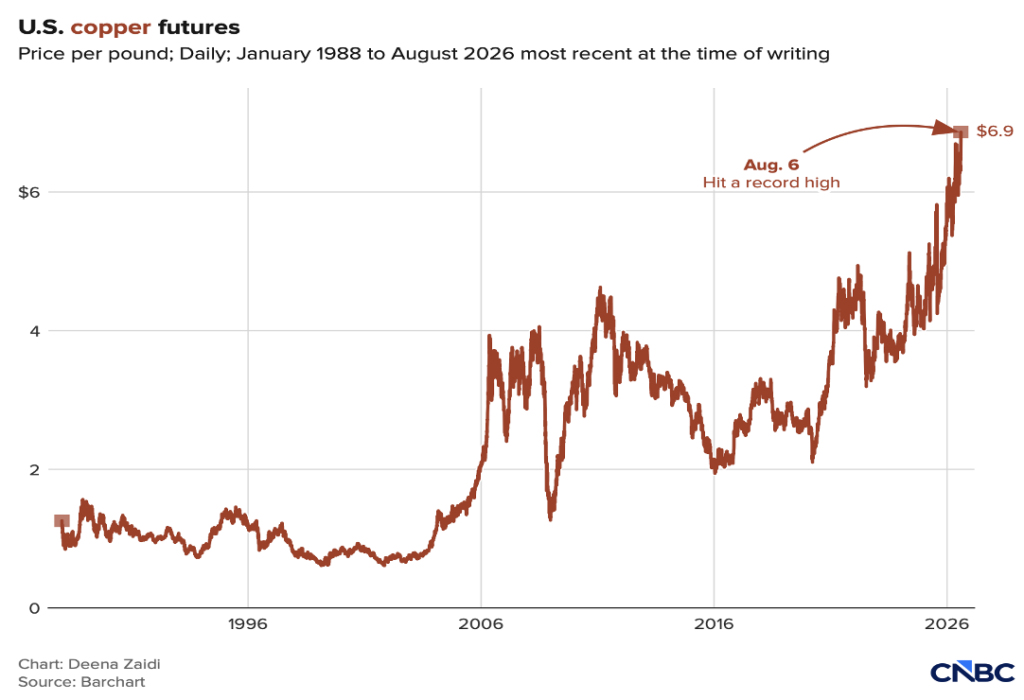
The impact of the AI boom can be seen in many places in the US and global economy. Copper prices this week caught everyone’s attention, hitting a new record high. Not all of this price movement is directly attributable to the electricity distribution demands of AI; there have been supply disruptions in Chile because of bad weather, and the threat of new US tariffs has encouraged the kind of stockpiling witnessed last year as well. But whereas copper prices used to be such an indicator of overall economic health that it was nicknamed “Dr. Copper” (in no small part because housing construction raised copper demand), at the moment it is viewed as just another sign of the intensity of the AI race.
Labor’s share of national income has been falling through most of this century, although it rises briefly during recessions when falling profits tend to hit owners of capital harder and more immediately. This calculation of the piece of the pie going to workers must be seen with a healthy appreciation of the data challenges; self-employed individuals are considered owners, not labor, and there has been a notable expansion in the utilization of both S-corps and K-1s to change income that would have been previously considered labor income into profit income. However, various methods to address these data problems essentially yield the same results. Despite the rising labor force productivity that enables economic expansion as labor force growth has slowed to a standstill, labor has claimed only a small portion of the monetary benefit via employment earnings.
Share of National Income: Labor
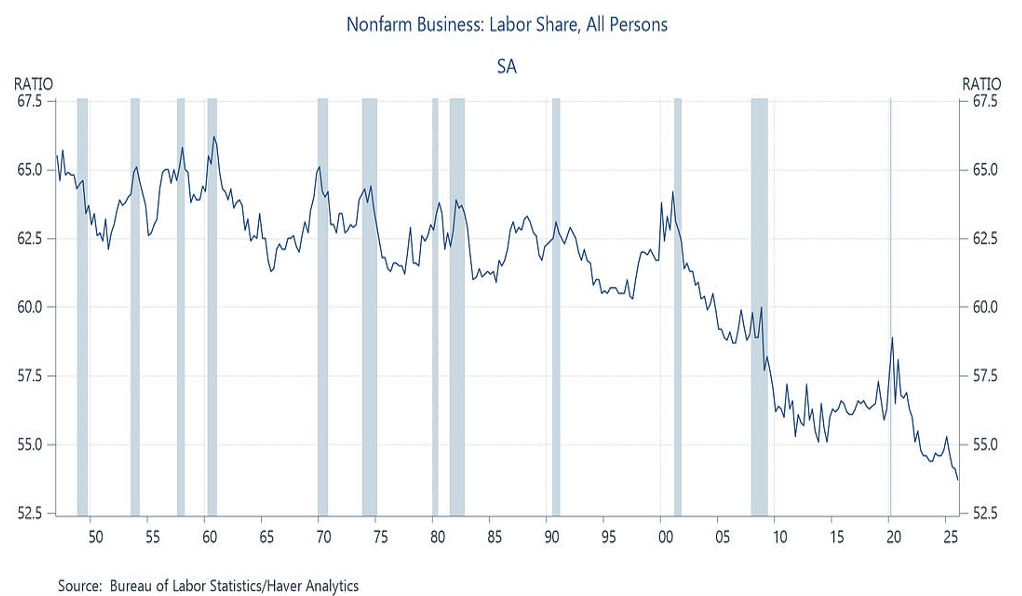
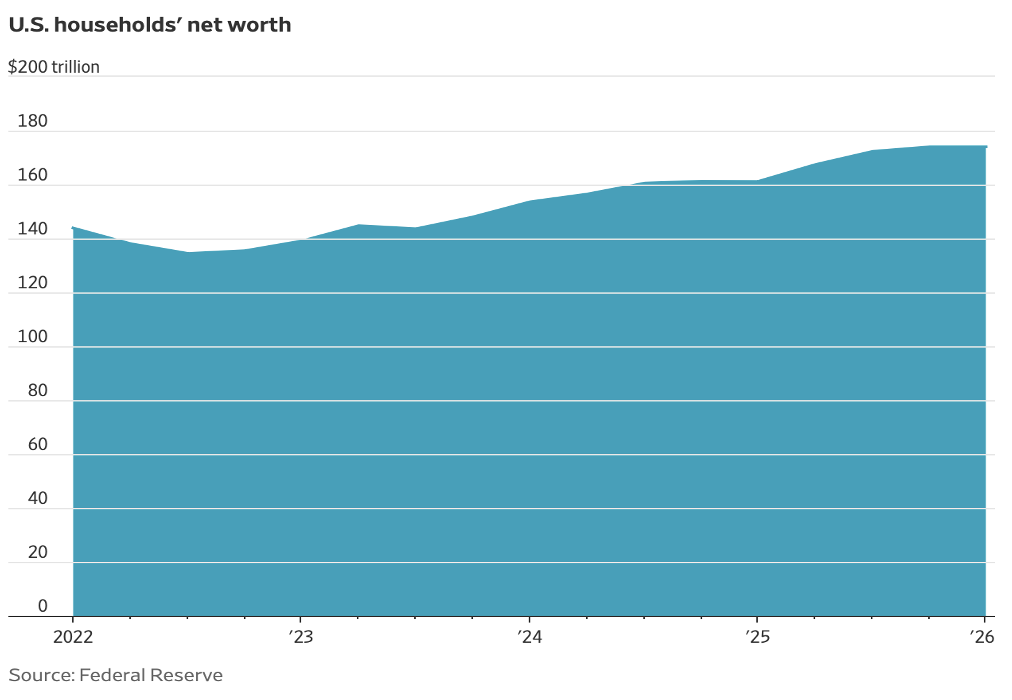
Consumer spending currently appears to sit on a three-legged stool formed by 1) a reasonably solid job market with little turnover, tight enough that a new job can be found over time, 2) employment compensation that is rising but not always enough to keep up with inflation and certainly not enough to replenish depleted savings accounts and 3) steady increases in household net worth as home prices stay high and rising equity markets bolster retirement portfolios. Economists have long recognized the small but detectable effect of home prices and stock market performance on consumer expenditures. Effectively, labor’s declining share of national income is being mitigated by labor’s increasing share of national profits, a situation that is unfortunately not uniform across the labor force.