September is a bad month for stocks. In fact, it’s the worst month, on average, for every U.S. stock index. Going back to 1928, the S&P has lost an average of 1.1% in September, and it ended the month in negative territory more than half the time.[1]
This is not to suggest any market timing schemes, but rather serves as a reminder of the extent to which the stock market reflects shifting attitudes and moods that are highly subjective. A seasonal zeitgeist, if you will. Gone is the summer high. In is the fall hustle, and if you’re looking, there’s plenty to worry about.
For those looking at the economy and the markets, the unfolding interest rate drama is high on the worry list. The 10-year Treasury rose above 5% this week to its highest level since 2007. High interest rates are concerning because they raise borrowing costs—for homebuyers, businesses, and governments— which in turn can slow down investment and economic growth. They can also drag down stock prices as investors demand a higher premium for accepting the risk posed by stocks instead of buying the safer government bonds.
Why Yields Are Rising
The causes of this recent rise in rates are multi-fold—some relatively new, and some a continuation of longstanding dynamics:
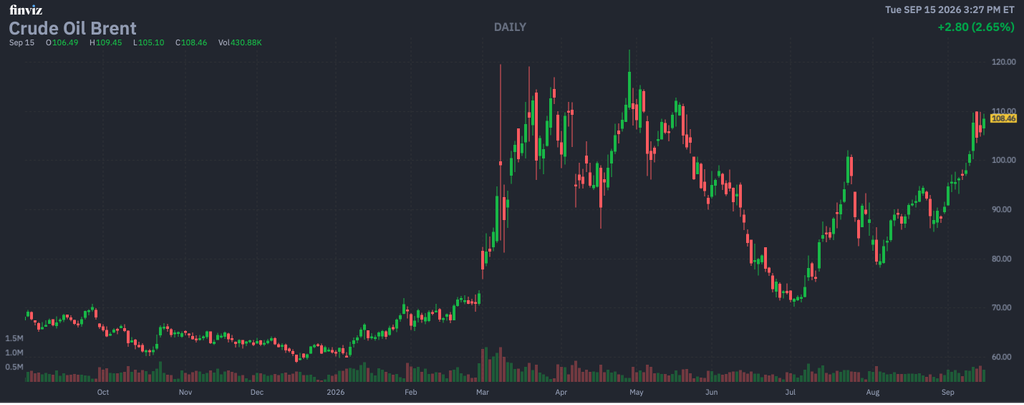
- Inflation and Geopolitics. In the shorter term, concerns about rising inflation are back in the headlines. A key driver of this is the continuing and expanding war with Iran. While the Hormuz Strait remains in limbo, the strikes on Saudi Arabia’s East-West pipeline, and the Houthi takeover of islands in the Bab al-Mandab Strait in the Red Sea challenge established Hormuz workarounds. As a result, oil prices spiked to above $100 per barrel, their highest level since May. Higher inflation in turn puts pressure on the Fed to raise interest rates, and the credibility of the new Fed Chair Kevin Warsh, who is also close with the President, is seemingly on the line. The Fed raised its rate on Wednesday, and while the Fed mostly impacts the shorter end of the yield curve via the overnight rate, it’s getting harder for investors to see the Iran war and the fallout on oil prices as temporary.
- Concern over Sovereign Debt. Traditionally, the largest issuers of long-term bonds have been national governments borrowing to finance deficits and maturing debt. However, investors are increasingly signaling concern over growing debt loads, with countries including the U.S., France, Canada, and Britain having high levels of sovereign debt, nearing or exceeding 100% of GDP. As we’ve written before, growing national deficits are a systemic risk to countries’ fiscal autonomy, and bond market investors are signaling their disapproval, including with moves that promise to add to the national debt like the election promise to send all Americans a $5,000 check at the cost of over $1 trillion.[1]
- AI Hyperscalers Join the Party. Adding onto this stress on long-term rates is the growing supply of bonds issued by AI hyperscalers looking to finance the building of data centers and other AI infrastructure. Research by JP Morgan suggests that five companies alone have this year issued long-duration debt equal to 68% of long-term U.S. Treasury borrowing.[2] The rising costs that this flood of borrowing is contributing to may be one reason AI company CEOs are suddenly more eager to pump the brakes on continued AI model development.
- A Changing Buyer of Long-Term Debt. Finally, the investors buying U.S. Treasuries are also changing. Historically, the largest holders of long-dated Treasuries were insurance companies and pension funds. However, this dynamic shifted over the past decades of ultra-low rates, and today a growing amount of Treasuries are held by hedge funds. These more opportunistic investors now hold a record 7% of Treasuries, mostly to cover highly leveraged trades like the Basis Trade, raising concerns about the stability of the market should they choose to liquidate their holdings.[3] It’s unclear if this transition is directly affecting current bond prices, but the shift adds additional risk to an already stressed market.
In all, the tumult in the bond market is the conjunction of long-term trends like rising government debt, and more recent developments like the escalation of hostilities in the Gulf and increased borrowing by AI hyperscalers. Combined, these forces are testing the willingness of long-term borrowers, both government and AI hyperscalers, to continue to borrow at these elevated rates. For both, a moment of reflection on their fiscal trajectories may be a good thing.
Highly cognizant of the impact of interest rates on government borrowing costs, housing, and economic growth, the U.S. Treasury has stepped in to try to calm down investors by increasing the buybacks of long-dated bonds. This effort did little to reassure the market, demonstrating once again the extent to which a large debt load places outsized power in the hands of lenders.
What This Means for Investors
For investors, rising rates can be scary as both bonds and stocks can see correlated declines, as in the past week (recall that bond prices go down when yields go up). Bond market investors should consider where on the yield curve they want to be, and how to balance locking in higher yields with interest rate risk in their portfolio. This is typically best achieved by holding individual bonds in a separately managed account tailored to the investor’s needs. Further, rising rates may present an opportunity for those with capital to deploy.
Finally, while stocks can be volatile in periods of rising rates, over a longer time horizon stocks can be a good hedge against inflation as companies raise prices to account for increased expenses. But most important is to remember that markets are driven as much by sentiment as by data, and this is September, historically the worst month for U.S. stocks. Welcome back.
Wishing you all happy first days of fall weather. Keep an eye out for my quarterly letter in early October.
— AMD