RS Logo

Insights

Five Charts for the Week that Was: October 2, 2026

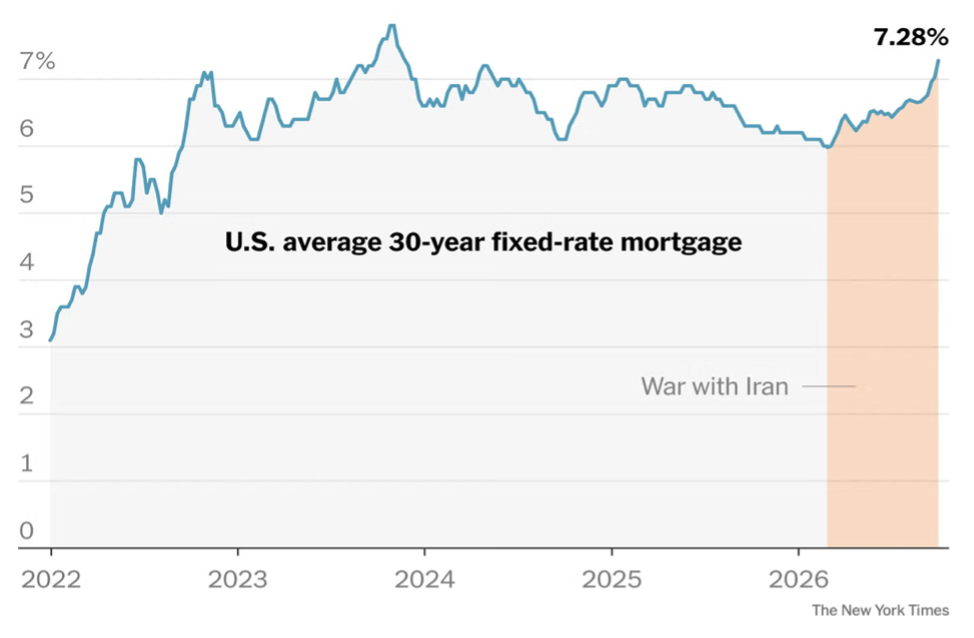
While the US economy has evidenced persistent, impressive resilience in the face of numerous challenges—second–quarter growth was recently revised upward, and third-quarter growth is estimated to be well above 2.5% —the housing sector has been an equally persistent source of weakness and concern.  Mortgage rates are the latest difficulty, pushed to the highest level since 2023 by rising bond yields. 
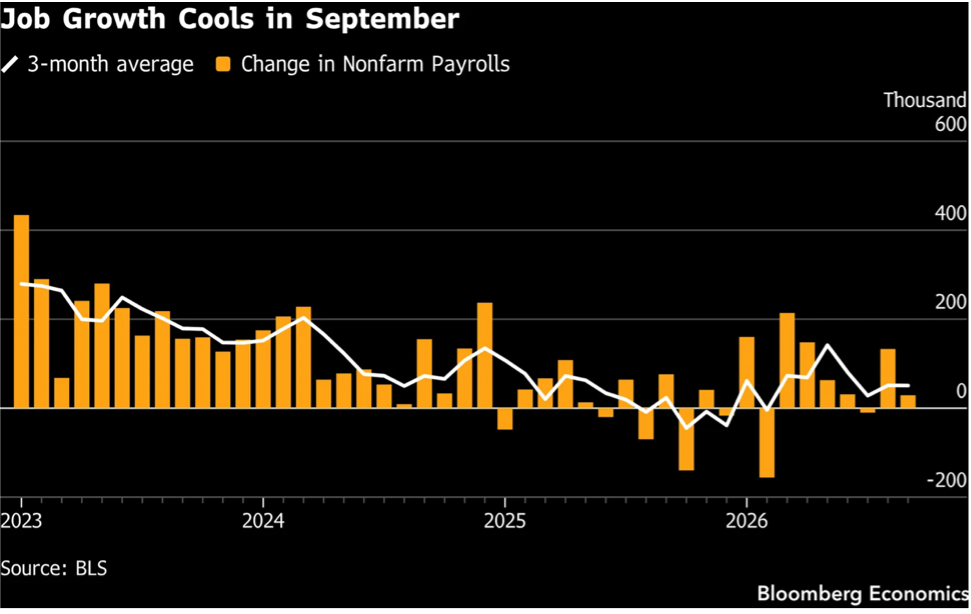
The September employment report will not bring any happiness to the housing market. The headline news is an increase of only 29,000 jobs and a tick up in the unemployment rate to 4.2%, but the downward revisions to August and July are arguably the bigger story. Looking at the three-month moving average is a helpful perspective, yet it remains that there were 60,000 jobs fewer than originally reported.
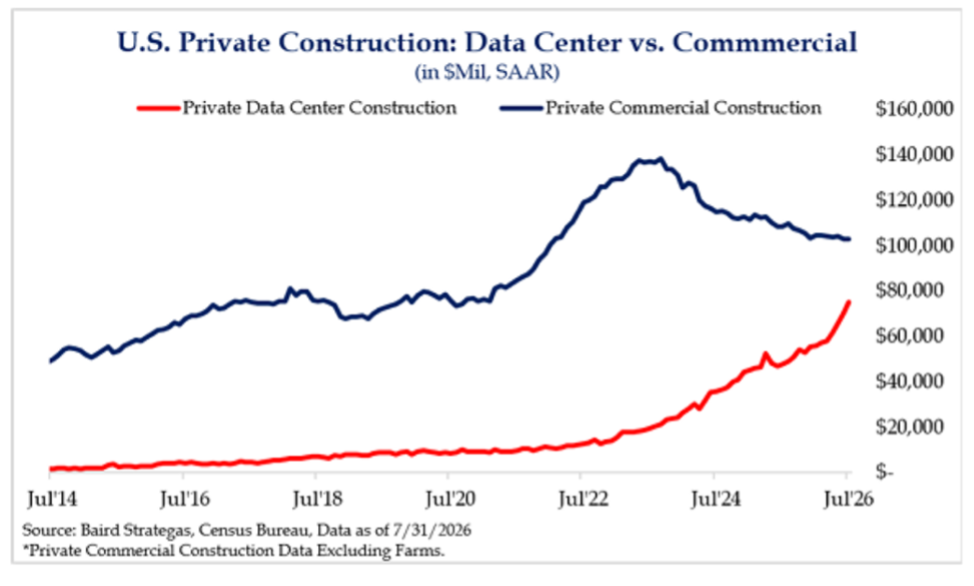
Growth in construction employment was one of the employment bright spots in September, along with health care. With the residential housing market so weak, however, it is clear that the boost to construction employment is coming from the data center build-out. Some of those data center plans are now threatened by moratoriums and work stoppages, a development that is likely to factor into the labor market picture as the holidays approach.
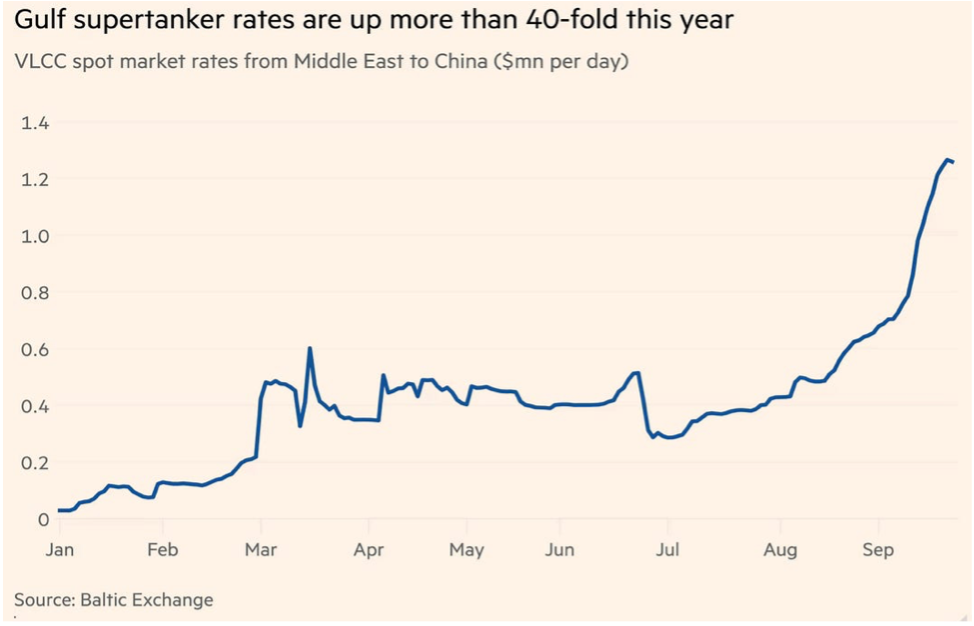
Oil and general cargo shipments are making their way through the Strait of Hormuz VERY carefully, with the assistance of the US Navy. The transport is utilizing smaller-sized carriers that transfer cargo to larger vessels upon exiting the danger zone. Not surprisingly, the impact on rates for very large cargo container (VLCC) vessels, including tankers, has skyrocketed, keeping the effective cost of oil high, even when spot crude oil prices fall.
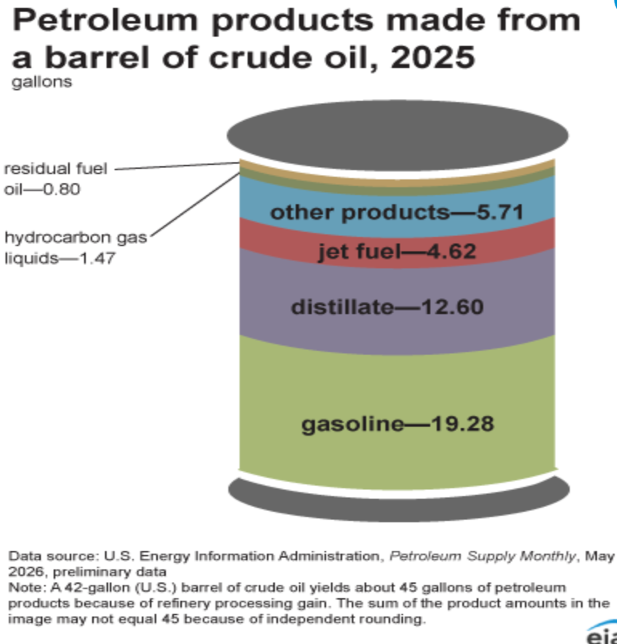
There is global concern over the possibility of a US ban on diesel exports.  Europe is especially worried about the impact on fuel prices in euro area economies that are on something of a knife-edge. However, there is also considerable angst in the US marketplace, in part due to the realities of petroleum refining.  A barrel of crude oil yields a number of different products as a result of the refining process. A diesel (“distillate” is mostly diesel) export ban would potentially fill up storage tanks and force a reduction in overall refining activity, raising prices for other crude oil products, including gasoline.
Disclosure and Source

Investment advisory services offered through Robertson Stephens Wealth Management, LLC (“Robertson Stephens Wealth Management, LLC”), an SEC-registered investment advisor. Registration does not imply any specific level of skill or training and does not constitute an endorsement of the firm by the Commission. This material is for general informational purposes only and should not be construed as investment, tax or legal advice. It does not constitute a recommendation or offer to buy or sell any security, has not been tailored to the needs of any specific investor, and should not provide the basis for any investment decision. Please consult with your Advisor prior to making any investment decisions. The information contained herein was compiled from sources believed to be reliable, but Robertson Stephens Wealth Management, LLC does not guarantee its accuracy or completeness. Information, views and opinions are current as of the date of this presentation, are based on the information available at the time, and are subject to change based on market and other conditions. Robertson Stephens Wealth Management, LLC assumes no duty to update this information. Unless otherwise noted, any individual opinions presented are those of the author and not necessarily those of Robertson Stephens Wealth Management, LLC. Performance may be compared to several indices. Indices are unmanaged and reflect the reinvestment of all income or dividends but do not reflect the deduction of any fees or expenses which would reduce returns. A complete list of Robertson Stephens Wealth Management, LLC Investment Office recommendations over the previous 12 months is available upon request. Past performance does not guarantee future results. Forward-looking performance objectives, targets or estimates are not guaranteed and may not be achieved. Investing entails risks, including possible loss of principal. Alternative investments are speculative and involve substantial risks including significant loss of principal, high illiquidity, long time horizons, uneven growth rates, high fees, onerous tax consequences, limited transparency and limited regulation. Alternative investments are not suitable for all investors and are only available to qualified investors. Please refer to the private placement memorandum for a complete listing and description of terms and risks. This material is an investment advisory publication intended for investment advisory clients and prospective clients only. Robertson Stephens Wealth Management, LLC only transacts business in states in which it is properly registered or is excluded or exempted from registration. A copy of Robertson Stephens Wealth Management, LLC’ current written disclosure brochure filed with the SEC which discusses, among other things, Robertson Stephens Wealth Management, LLC’ business practices, services and fees, is available through the SEC’s website at: www.adviserinfo.sec.gov. © 2026 Robertson Stephens Wealth Management, LLC. All rights reserved. Robertson Stephens Wealth Management, LLC is a registered trademark of Robertson Stephens Wealth Management, LLC in the United States and elsewhere. A3879

Talk To Us