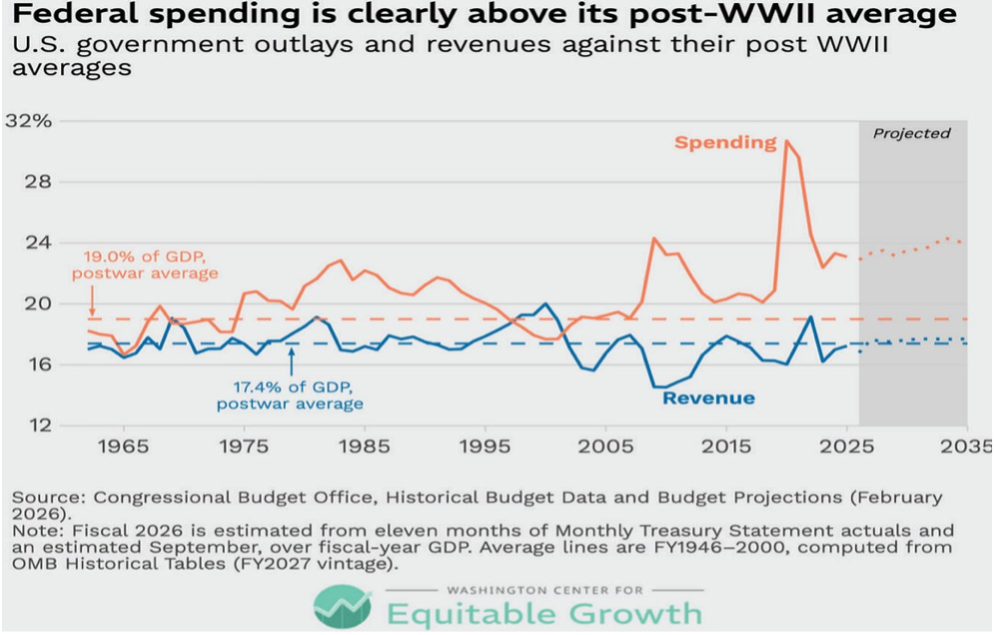
October 1 marks the start of the Federal Government Fiscal Year 2027. Normally, a report on the FY2026 budget (deficit) would be available by now, but it has not be released yet; there are expectations for the Department of the Treasury to issue the final numbers for FY2026 sometime in the next two weeks. The Congressional Budget Office (CBO) has estimated the budget deficit for FY2026 at just shy of $2 trillion. The broad issue driving the deficit is a revenue stream that has remained relatively constant as a share of GDP, while expenditures have grown significantly.
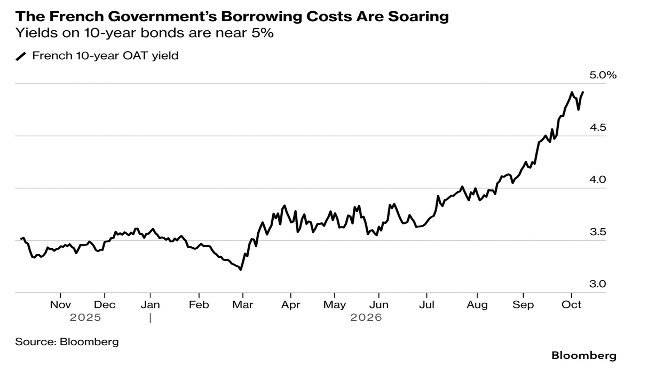
The mismatch between expenditures and revenues is a problem facing many countries in the world today. France has become a cautionary tale for the dangers of ignoring the realities of demographic changes, entitlement programs, and insufficient economic growth (the tax base). The French government’s borrowing costs have reached levels that were unthinkable just six months ago and are notably higher than those of France’s European peers. Investors in government bonds are becoming increasingly aggressive in demanding compensation for what they consider to be a high and rising level of fiscal budget risk – in France and elsewhere.
Declining employment in China reflects the forces of technology and the shift in industrial production to higher value products with lower labor-intensity. Slowing population growth has mitigated some of the risk of rising unemployment, but the under-30 population is considered seriously underemployed and rife with associated dissatisfaction. Unlike the situation in France, lower employment does not necessarily create an immediate fiscal crisis, but, like France, it does raise concerns about social stability.
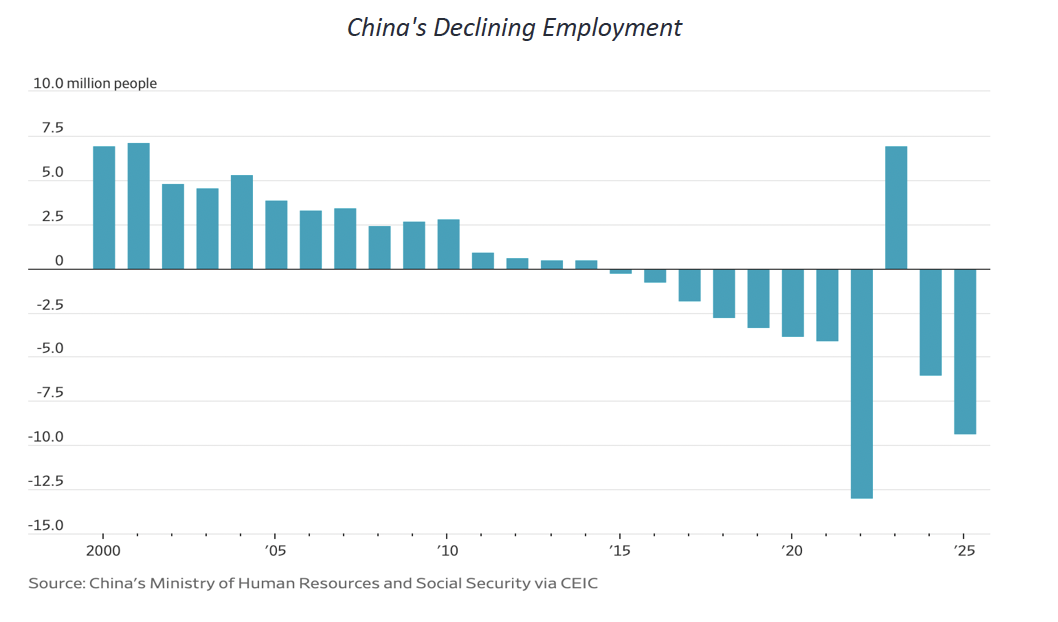
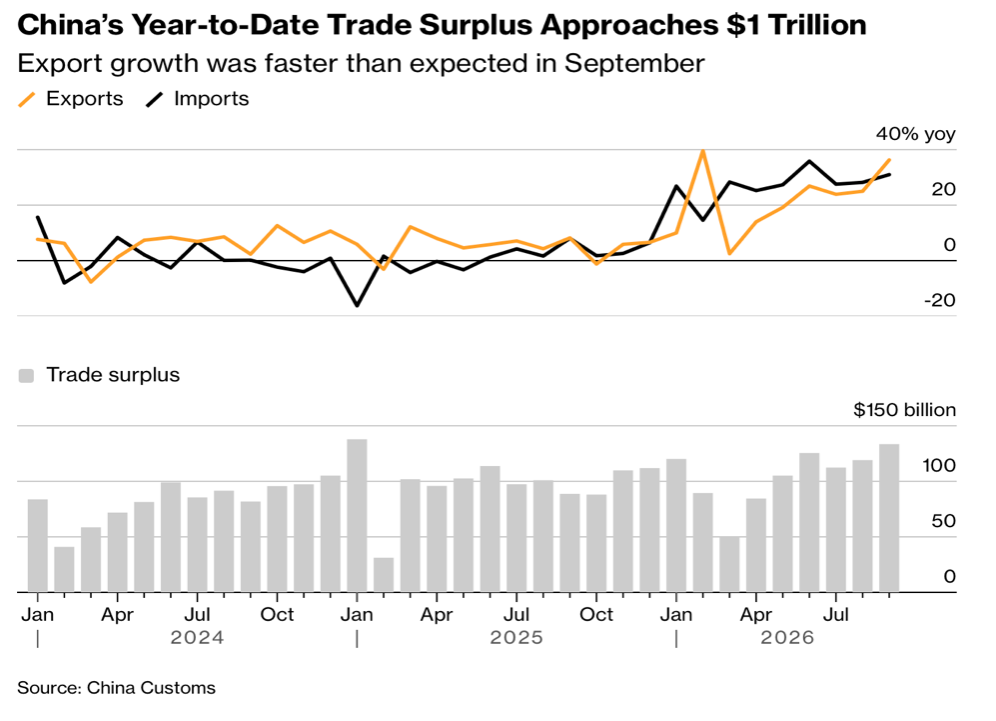
Lower employment levels generally translate to slower consumption spending growth, and, indeed, domestic demand in China has been and continues to be sluggish. However, despite various trade actions in the US and Europe aimed at curtailing Chinese imports, China’s export growth is robust and rising. China’s electric vehicles and technology products are experiencing strong global demand, and government tax incentives provide exporters with important financial support. Whereas the fiscal risk for many developed economies comes from increasingly expensive social programs, China’s fiscal risk derives from high-cost government policies benefitting businesses.
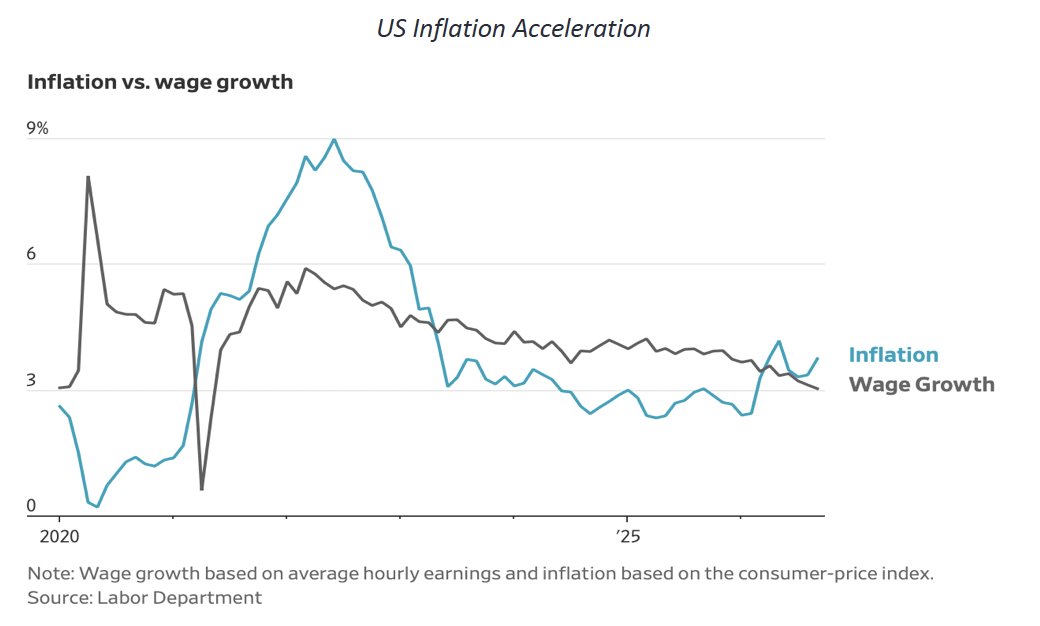
Contrary to many hopes, US consumer price increases accelerated in September. Much of the increase is attributable to the much higher cost of energy and petrochemicals, but the impact of the price shock is now spreading into a wide variety of products and services. Tariffs on producer goods are also now being fully passed on to consumer end-users as energy costs have left many producers feeling they have no choice. The fundamental problem of inflation rising considerably faster than wages is one that will come back to bite the sellers of goods and services, however, possibly as soon as the upcoming holiday season.