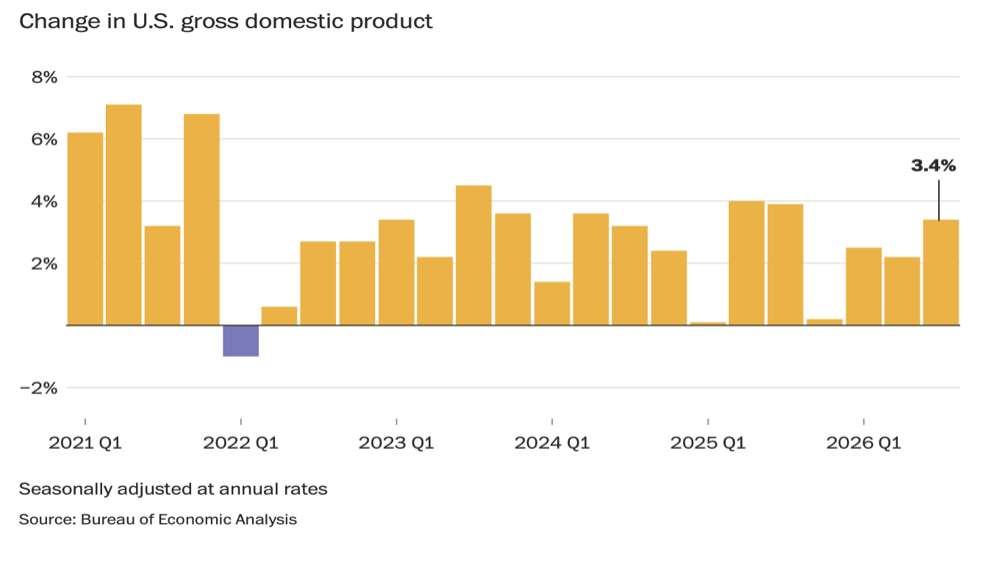
The US economy grew an estimated 3.4% in the third quarter, a pace at the top range of the estimates but not entirely surprising. Capital spending was the exceptional driver of growth; business investment in equipment rose at a 20%+ annual rate. However, the bedrock of the economy is still consumer spending, and its growth of 3.8% in the third quarter is probably the most significant element of the remarkably robust number.
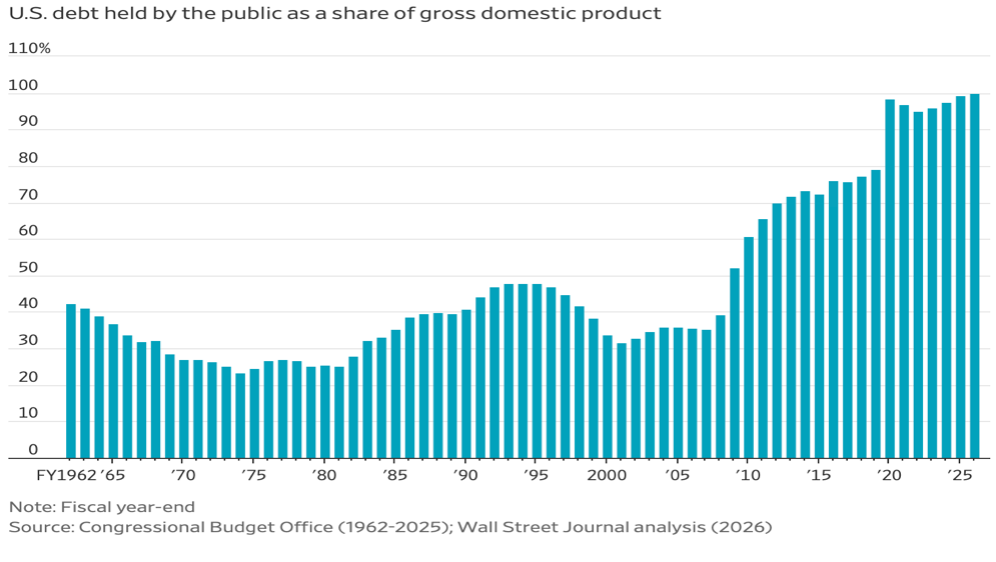
Tax revenues generated by strong economic growth fund US government spending. US federal debt held by the public (not inter agency) has now risen to slightly more than 100% of GDP. The degree to which this debt position is problematic is a function of the prospects for future economic growth and expectations for those tax revenues. Given the federal government’s taxing authority, a rapidly growing economy can sustain higher levels of debt.
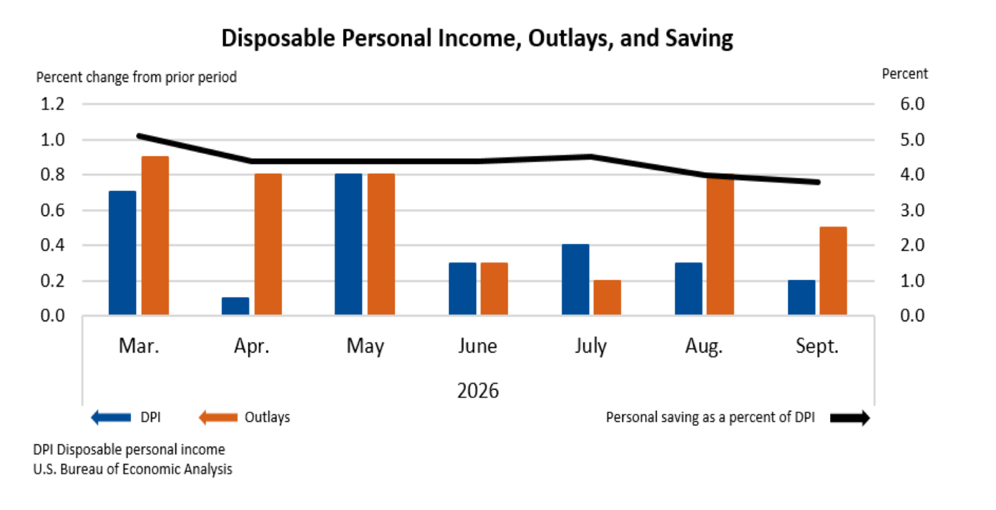
Consumers continue to fund spending by drawing down savings, increasing their borrowings, and liquidating appreciated assets (real estate, equities, bonds). Spending on food and energy rose sharply in September, propelled by escalating prices; consumer expenditures for gasoline accounted for more than 40% of the increase in outlays. More discretionary purchases of clothing, furniture and entertainment were either flat or declining. Amazon understandably has issued a caution about the outlook for holiday sales this year.
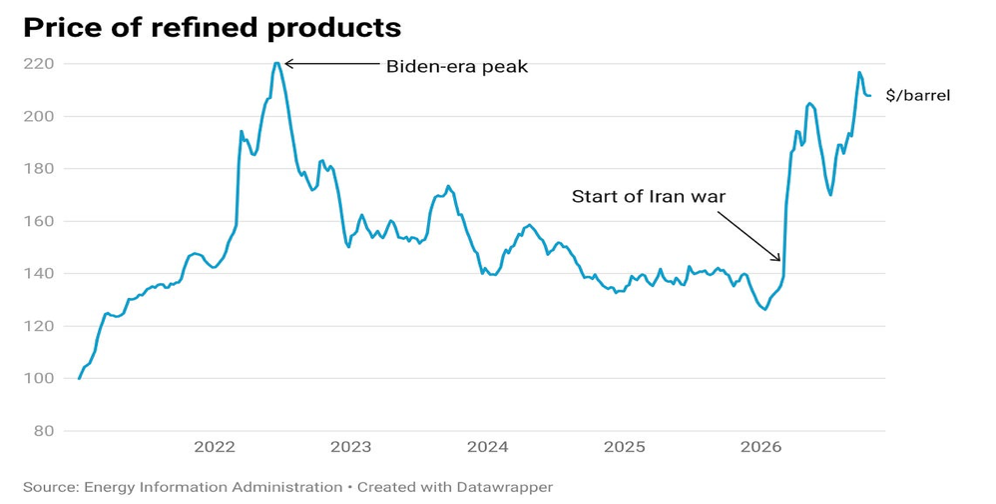
As has been frequently mentioned, the direction and impact of higher oil and gas prices cannot be accurately measured by looking at crude oil prices alone. Refined products, including diesel and various petrochemicals used in everything from drugs to plastics, are the more direct contributors to the price escalation spreading through the economy and concerning the Federal Reserve. Since preparing this chart, refined product prices have taken another turn upwards, partly in anticipation of increased military action in the Middle East.
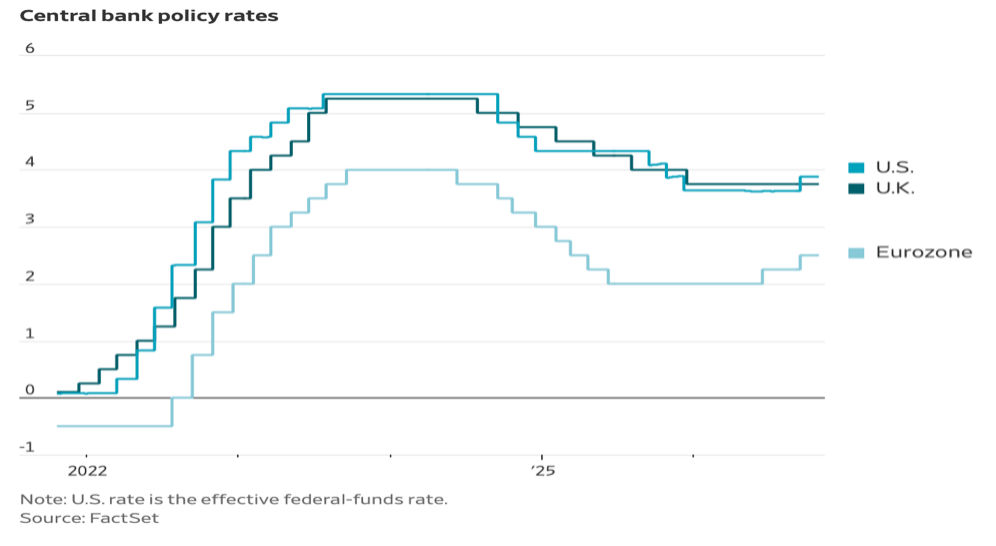
Central bankers everywhere have put interest rate actions on pause, for a variety of reasons. Most recently, the Bank of Japan has announced its view that 2% inflation has been successfully achieved, after years of deflation, allowing it to leave monetary policies unchanged. The Federal Reserve sits at the opposite end of this spectrum, waiting for more data to see how badly inflation is moving away from its 2% target. In Europe, leadership uncertainty at the ECB (European Central Bank) has prompted a moratorium on a variety of policy decisions until the successor to departing ECB President Christine Lagarde has been identified. With the possible exception of Japan, markets anticipate another round of interest rate increases as early as December.





Robertson Stephens paid no fee to obtain recognition but has paid licensing fees to reference its appearances on the Newsweek, USA Today, and FA Magazine rankings lists. See Awards Disclosures