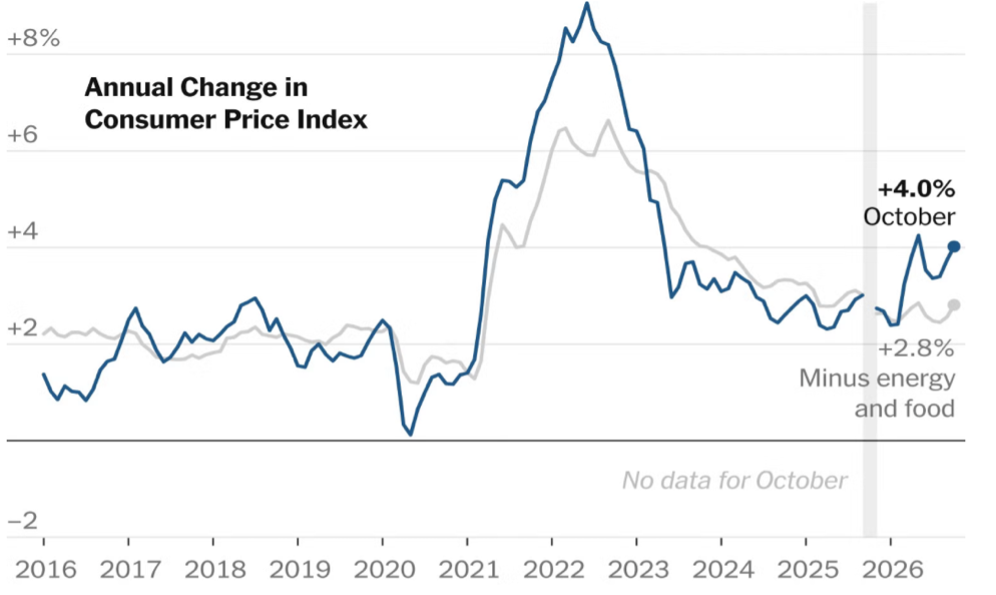
The Consumer Price Index rose 0.4% in October, a monthly pace only slightly above the widespread expectations for a 0.3% Increase. Yet the negative reaction of market observers and Federal Reserve Governors was intense. There are many difficulties with this number, not the least of which is the inability to compare some of the component data with data from October 2025 (due to the government shutdown). Nevertheless, the breadth of the price increases and the strength of the move in completely the wrong direction seemed to provide the impetus to definitively “do something.” Beyond raising interest rates again, in December, it’s not clear what can be done immediately.
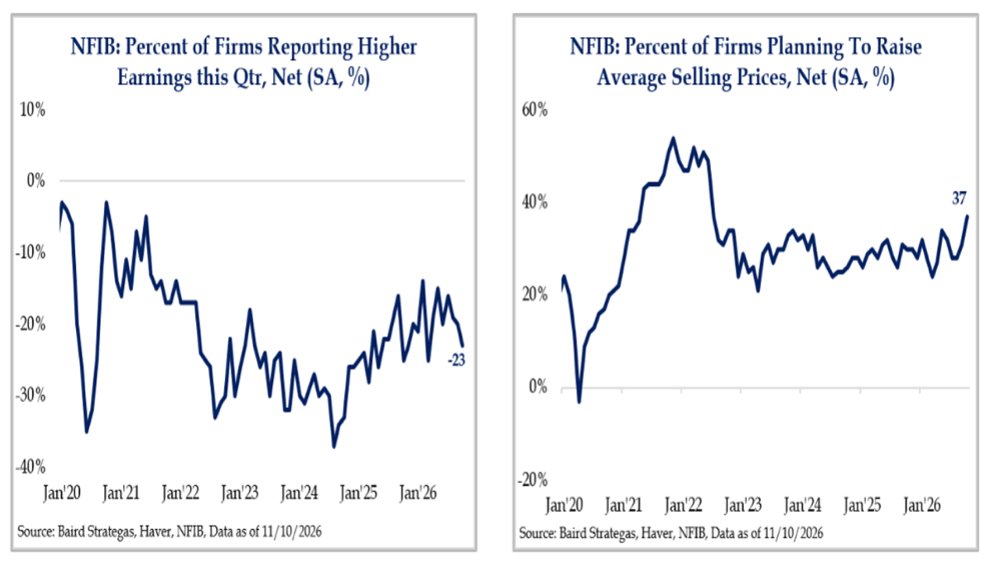
Circumstantial evidence from multiple sources has bolstered the business community’s long-standing message that more final product price increases are yet to come in 2026, as partially shown in the October CPI. The continuing high price of energy and petroleum products has proved to be the tipping point for the ability to hold onto profit margins in the face of tariffs and supply chain difficulties.
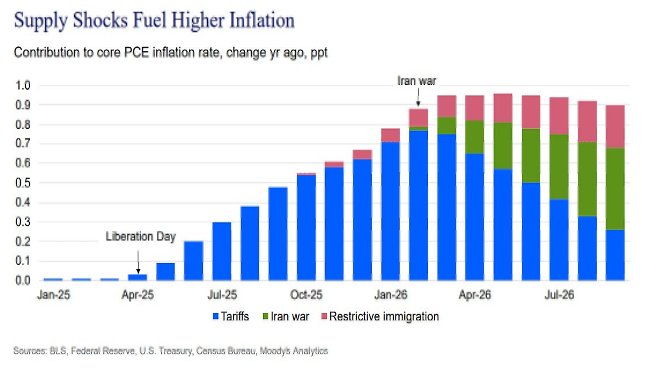
Tariffs are primarily keeping prices high, as opposed to supercharging inflation as they did in 2025. However, those price pressures have not gone away, while refined product prices and, increasingly, costs associated with labor supply challenges have risen sharply. Although conventional labor compensation measures have shown little inflationary pressure even as the unemployment rate falls, labor productivity and labor availability in key sectors such as agriculture, food processing and construction are raising costs painfully for those businesses.
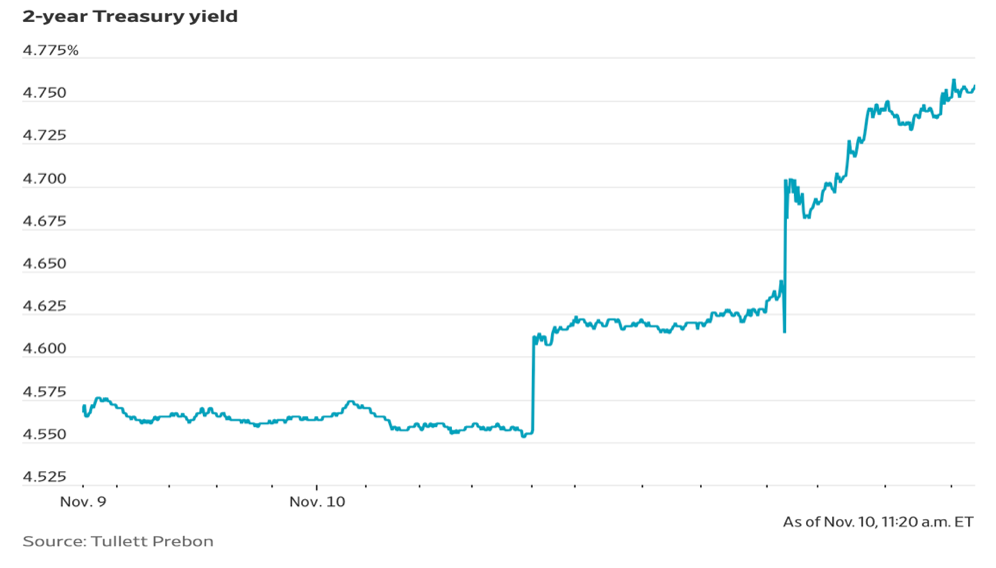
Bond markets took immediate note of the October CPI and responded accordingly. Some of the upward movement in Treasury yields may reflect a modest flight to safety as AI investors debate the future, but the timing of the move suggests it has more to do with the inflation outlook. Two things are likely weighing on bond market investors: the likelihood of more aggressive Federal Reserve interest rate hikes and the adverse impact on the US national debt from legislative actions to address consumer affordability issues.
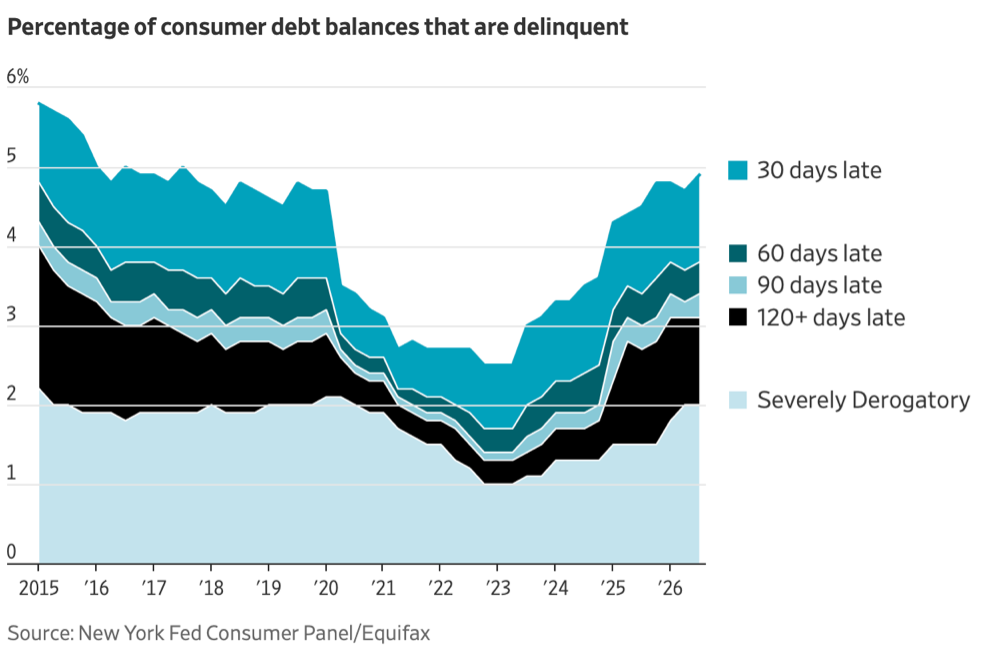
As the outlook for interest rates changes, the focus on household debt burdens will increase. At present, the picture is mixed. There is little indication from the banking industry of any noticeable consumer stress. Household debt, by and large, seems to be well within historical norms. The sharp increase in 120+ day delinquencies since early 2025 is capturing some attention; however, the numbers, like much else in the aggregate consumer balance sheet, appear similar to the 2016-2020 time period. One of the more notable features of the pandemic economy was the increase in household savings and the paying down of debt; that environment is long gone, and nonresidential debt is much more expensive than it was in the pre-pandemic world.





Robertson Stephens paid no fee to obtain recognition but has paid licensing fees to reference its appearances on the Newsweek, USA Today, and FA Magazine rankings lists. See Awards Disclosures