

Luxury in the Sky, and Its Environmental Toll
For ultra-high-net-worth clients, private jet travel represents both convenience and exclusivity. Yet this elevated mode of transportation carries an environmental footprint disproportionate to its scale.
While private jets contribute a small percentage of global air traffic, their per-passenger carbon emissions significantly exceed those of commercial flights, highlighting a critical sustainability dilemma.
The Carbon Footprint of Private Jets
On average, private jets emit between 1 and 2 kilograms of CO₂ per passenger-kilometer—ten to forty times more than commercial airlines.
For example, a Gulfstream GIV flying 1,000 kilometers produces approximately 1,067 kilograms of CO₂ with only three passengers on board. By comparison, a Boeing 737 covering the same distance emits substantially more carbon overall but distributes those emissions across approximately 150 passengers, resulting in a considerably lower per-passenger impact.
Adding to this environmental challenge are "empty-leg" flights, during which jets reposition without passengers to meet subsequent bookings. These flights account for approximately 35% of private jet movements, increasing carbon emissions per passenger-kilometer by an additional 35% to 40%.
Public perception is increasingly scrutinizing the sector as climate awareness rises globally, particularly when high-profile events such as the Cannes Film Festival draw attention to the contrast between luxury travel and sustainability goals. The private aviation industry now faces growing pressure to reconcile exclusivity with environmental responsibility.
Sustainable Aviation Fuel (SAF): A Promising Solution
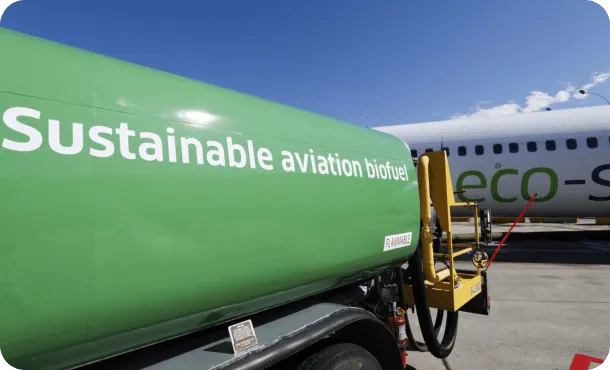
Sustainable Aviation Fuel (SAF) has emerged as a key innovation transforming the conversation around aviation sustainability. Derived from renewable feedstocks such as agricultural residues, algae, and recycled cooking oil, SAF can reduce lifecycle carbon emissions by up to 80% compared with traditional jet fuel.
Crucially, SAF helps close the carbon cycle by capturing CO₂ during feedstock growth, mitigating net emissions when the fuel is ultimately combusted.
Despite its potential, SAF currently accounts for less than 0.1% of global aviation fuel consumption due to its high cost—often two to three times greater than conventional jet fuel—and limited production capacity.
Nevertheless, major aircraft manufacturers and private aviation operators are actively piloting SAF integration, while regulatory initiatives and government incentives are expected to accelerate adoption and scale production.
Robertson Stephens Wealth Management: Partnering on a Sustainable Legacy
Navigating the intersection of wealth optimization and sustainable living extends far beyond investment selection. Robertson Stephens Wealth Management's comprehensive approach embraces fiduciary stewardship, strategic planning, and generational wealth transfer, helping ensure that your assets remain aligned with your values and long-term family vision.
Our offices in Bellevue and New York specialize in supporting UHNW clients through solutions ranging from institutional-grade market strategies to thematic social-impact investing and ESG integration—critical tools for addressing the complex considerations surrounding sustainable luxury travel.
By collaborating with experienced advisors who understand the nuances of ultra-high-net-worth stewardship amid evolving global priorities, clients can optimize time, health, family continuity, and resources—the true measures of enduring wealth beyond capital alone.

.webp "ultra-high-net-worth")